Monday, July 10, 2006

Odalis Garcia Galleries

Latin American Film Week Brazilian Short


1 July 2006


Is film school or go to school movies?

Students in fourth and fifth year of Municipal Middle School participated in the week of Latin American Cinema.

The appointment was in the Abasto Shopping, very early. The consuming public this time focused on a young crowd still bleary-eyed. The boys rushed after giving this to the tutor or teacher in charge to enter the larger room of Hoyts Cinema before closing its doors at half past eight. The fuss is because classes for kids in fourth and fifth year of Middle School Municipal Federal Capital this week were in cinema. From Monday to Friday, every morning, over three hundred young people shared a different kind of film that usually see. Latin American film series opened with Enlightened by Fire, of Tristan Bauer.
"What struck me was to tell the horrors of war as someone who lived it. Some scenes the sights but it's like you're there. " Ayelén, Romania left school, like so many young people unaware of the Falklands War, shocked with the film. Furthermore, the projection is complete, students participated in a debate with the director and co-author of the book.
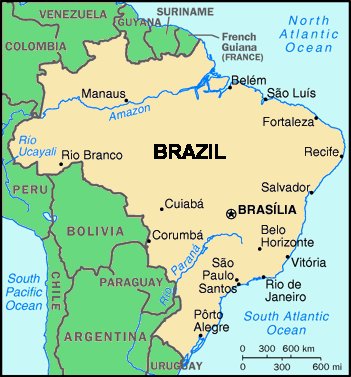
Light ... and Mary, full of grace, were representatives of national cinema. In Cuba he was Strawberry and Chocolate. Brazil did this with a series of short films Fernando Meirelles, director of City of God. "The shorts were the most, in no time you turn your head," added Julian of Rodolfo Walsh. Although many also felt their heads shake him yesterday, closing the week with Machuca, the film by Chilean director Andrés Wood.
This is the second cycle of Film and Youth Debate last year started the idea, sponsored by the Ministry of Education, Science and Technology with European Film Festival. A more than positive, to help kids become espectares quality film critics in the midst of a cinematic agenda seems more guided by the box office figures for the richness of its proposal.

Wait To Shave Before Wax


In this cycle, something worthy of note was undoubtedly the screening of Brazilian short films, some of the hand of the director of "City of God" (Victor Gonzalez). These short films were the main feature of high social content, like the rest of the films in the cycle but approached from a rather unique, ranging from the humor, even without anesthesia show a devastating reality.
Referring to the arguments, deserve recognition are "red BMW", "Island Flower, "" The soul of business "and" Palace II ", particularly I think" Barbosa ", one in which man tries to avoid the Brazilian goalkeeper's error cost them the world of the '50s, is little substantial and is far from the social issues addressed in the other short.
"red BMW" uses humor to teach something sad, like a family to win a BMW car when you barely have a home. Either way, it shows how, despite all, it is possible to be happy enjoying a car ride.
"Island of Flowers" I think it was one of the strongest. Told how, after a long process-narrated in a very comical with many repetitions, the whole rotten food that ended in La Isla de las Flores, and was rejected even as feed for pigs, was part of the food of the people who inhabited the area.
"The soul of business" was the most comical, with a theme no less important, but more "light", a marriage that her life was constantly in an advertisement, just killing the same products as advertised. Finally
"Palace II" is not the most content, but the most explicit, in which we see reality within favellas: like two guys who should be at school, doing things like taking drugs and stealing to get money.
These short, rather than to enjoy a moment of international cinema, used to consider how different we are from Brazil, ie, is that reality is so distant from ours?
is valid to consider that although we are two distinct nations and therefore we have differences, we also have features that bring us together, as is the survival of the fittest in a society full of injustice.

Sabrina Medvedeff

Knitting Toys Pattern Waldorf

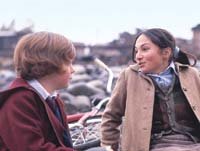
Machuca and the look of the boys

sheet:
Machuca - Chile- Spain-Britain-France, 2004, 120 minutes.
Director: Andrés Wood
Screenplay: Roberto Brodsky, Mamoun Hassan, Andrés Wood
Photo: Miguel Joan Littin
Music: José Miguel Miranda
Editor: Fernando Pardo
Starring: Matias Quer, Ariel Mateluna, Manuela Martelli, Aline Kuppenheim, Ernesto Malbran, Federico Luppi
Genre: Drama


A look innocent when the classes mix

Focusing on a young protagonist, the Chilean Andres Wood reflects the days before the coup that overthrew in September , 1973, Salvador Allende in Chile. The story is told from the eyes of a lower class boy, Pedro Machuca, who enters a school for rich kids, for a new project that had been made to ensure that all children have an equal education. During this project meets Gonzalo Pedro Infante comes from a family with a good financial move, but despite their differences to become friends.
What the director tries to show is like for two children the differences do not exist and can be great friends despite this. A truly moving story in every sense.


Melina Soledad Menafra, Fiorella del Mazo

is an interesting film as it reflects a bit to Argentina because they are rich and poor is always the same struggle. This is noticeable
very large differences that exist and is also living in two very different realities.
The film talks about private school boys admitted lack of property by order of the school priest wanted to experience: to join the upper class to lower class.
As the film unfolds they become friends and Infante Machuca. Machuca is a poor boy and Infante the rich kid in the movie then you realize that a high-class child can never feel the same about a lower class because they live two different realities.
M elina Vega
The part that struck me most was when they killed the girl, who was lower class and was murdered for that reason, which shows a discrimination of these classes. A part that surprised me was the reaction of Machuca in the church to greet the father and the high class people also greeted him without showing differences noted after the event.
is a great film to reflect that everyone is equal in society as individuals and as part of it.

Karina Requena
director a private religious school, Father McEnroe, with support from parents, the school integrates children of alcoholics, several low-income families with the firm decision both groups learn to live together.
The father is a communist. It is approximately 50 years. When you start the coup in Chile, the military removed the priest and take over their school.
The film caused him more than a spectator emotion, she cried, laughed, as well as some not pleased, of course right?
Daniela Argueyo
was Gonzalo who, for all lacked nothing, and Machuca was this guy who lived in a slum and had to work hard as her neighbor and friend and her family.
In Gonzalo's school (private, bilingual, Catholic) Father and director of it, scholarship to some kids in the village where he lived Machuca, to integrate different social sectors.
The problem with this is that the context was not the most appropriate and the country's situation went from bad to worse.
Socialists and Communists against the coup leaders usually upper middle class.
Gonzalo's family did not need anything as you need and more getting on the black market.
Gonzalo's father was a socialist, but the mother did not. In view of the world, a perfect marriage. In fact the mother's father cheated with someone older but wealthy; Meanwhile the father traveled a lot.
The hypocrisy and ignorance of the mother, from my point of view, not so much by deception married to the father, but by the situation that puts young son, who was an accomplice in his clandestine meetings with her lover giving gifts in return.
parallel, the initial situation at school was the logic, rich against poor, up to partial integration of the two classes.
Gonzalo Machuca and are joining more and more to the point where no longer interested in the external situation of the country, fall in love with the same girl and they share everything together.
But this friendship gradually feel the blows and the distancing own pressure from outside.
The military took power by social differences more obvious and painful, and going back on his father's footsteps. With coldness and cruelty
soldiers kill much of the lower class devastating all in the eyes of Gonzalo.
Her mother, who apparently just wanted every comfort possible to the hand that out, she marries the man of power and drag their children to that reality.
Samantha Suanni


This film contains a great social critic. It shows how the characters are crossed by the culture, social status. Them beyond their individuality, acting as a collective in critical moments of his life.
Gonzalo, overwhelmed by fear, responds as his mother when Machuca and his friend take the bike making a joke. The child reacts violently to the injustice of discrimination. All the characters are identified by their social class, and each has a symbolic significance: Machuca, means the topics about, because his presence causes us to wonder why the differences, Gonzalo is a summary of his class, but above all things, unlike her, is an icon of justice.
We can say that, beyond the story told, can be a social reading that indicates a problem: The injustice and class differences.
Elena Lodovico
What is good about this film is that it demonstrates very well the political aspects of those years focusing on everyday life and the beginning of the friendship of children who, by their difference in class would never have managed to be friends if it were not for the performance of a priest trying to integrate children of the villages in a school for the upper class. They develop very interesting scenes, one of the one I liked is when you fight the girl's mother Gonzalo or another, very emotional, when Machuca is the only fire the priest who is displaced by the military.
Alexis Losada

Multifocal Contact Lenses

Enlightened by Fire and the look of the boys


ORIGINAL TITLE: Blessed by Fire
GENRE: Drama
ADDRESS: Tristan Bauer
SCRIPT: Miguel Bonasso, Tristan Bauer, Edgardo Esteban, Gustavo Romero Borri
PERFORMERS: Gaston Pauls, Virginia Innocenti, Pablo Ribba, César Albarracín, Arturo Bonin John Leyrado
PHOTO: Javier Juliá
MUSIC: Federico Bonasso, Leon Gieco
ASSEMBLY: Alejandro Brodersohn
ORIGIN: Argentina (2005)
Summary: After the attempted suicide of one of his former colleagues, Stephen, the protagonist of the story, is immersed in the memories of that war and twenty years of war, decides to island to be reunited with their past and heal old wounds.
Enlightened by Fire was made based on the book by Esteban Leguizamon, a former -Fighter of the Falklands War in that chronicles his experience, when at eighteen he was sent to the islands to fight one of the strongest armies in the world. The film shows the harsh reality of our past, seen from a different perspective, which not only shows the horrors of war, suffering from the cold and hunger, but also stories of friendship and fellowship.

Riguera Aldana, Sheila Rios

is a story that, to be real and part of our past, we can not turn back, beyond our tastes, this is a truth and that's the important. The director guides us on a journey, dark and dramatic, with Esen heartwarming and humorous that they have some humanity in the film.
our view is a very good movie that touches the feelings through a historical fact that affects the whole society and each of us.
Marianela Iassogna, Melina Andrade, Laura Rombolá
Much of the film shows the real and cruel reality of children who lived only 18 years, enjoying their mid-teens. They were bound and removed abruptly from their homes without even saying goodbye to their families. Were transferred to the Falkland Islands and subjected to various abuses and even torture imposed by authorities, although they were compatriots and the reason for their presence was to defend the flag and our land rights still belong to us, did not try as equals our soldiers, making them go hungry and cold. On the other hand, the testimony of Stephen Leguizamon, who participated in the debate after the screening, we generated more credibility because this is a true story. The effects and evidence that remain in the memory of each of the former combatants are indelible and displayed as is and make us feel a deep pain and helplessness, knowing that in those lands, leaving the lives of hundreds of young people who fought as true men. But bravery was not recognized, and this led to the suicide of many of those who survived.
Beatriz Angulo, Pamela Aguayo
Light ... is set not only in the war period (April-June 1982), but also realizes the time of crisis and Argentina's claim in 2002.
Unlike most war films, or related to the war in Light .. . not too many battle scenes (there should be two or three over 100 minutes of film), which makes the viewer focus on what living the characters and what they experienced soldiers who went to fight.
An excellent film that challenges the viewer's sensitivity and awareness causes.
Ruth Ramos, Yanina Romero, Marcia Peralez AGAL
The film is based on a real event that mobilized all Argentines, especially those who were relatives of the protagonists of the war, who fought for the Falklands against the British. Gaston Pauls and Esteban Leguizamon, the one who tells the story. The film shows especially the way soldiers had to live during the war and, after this, the survivors did not live as well as psychologically affected and many of them committed suicide or have intentantado. To me it was the one I liked, because it is part of our history. Begins when called to Stephen telling him that his friend, ex-fighter, Vargas was a suicide attempt with drugs and alcohol. Then the protagonist returns to find with all these ghosts that he had left in his past and remember, while accompanying his wife's friend. Most of the film shows during the war when he remembers Esteban especially as he and his friends went Vargas and Corrientes (who kill). Almost at the end Esteban Vargas dies and has a charm of their friends to the islands, and it is left where they buried the soldiers killed. He comes into the trench where they were sheltering three. That's the end.
Mailen García
The film takes the issue of the Malvinas war differently, shows scenes of death, weapons, but above all, the problems of the Argentine people either by their lack of weapons, the presence of soldiers too youth at the forefront of the war or because they had either had no idea how to handle a gun. Furthermore, the conditions in which they lived and how they fed were horrible, horrible, inhuman.
This film h ace to us, young people and also larger, more mature, we feel truly honored to be compatriots of those who fought in the Falklands War, so we identify this film that we removed the blindfolds and opened our minds and that since it changed our thinking on this war.
This film was great impact because they bought up the Japanese.
Matias Fortunato and Elian Mpatsios
Enlightened by Fire tells the memories of Esteban Leguizamon, a man of 40 years, in 1982, just 18, was taken as a soldier recruited to fight in the Falklands. From the look of Stephen, the film reveals the slow and gradual immersion of their fragile lives in the heart of death itself. At 20 years of war, Esteban decides to return to the Islands to return to his past and heal old wounds.
The film focuses on the experience lived and not so much a documentary but autobiographical.

Fernanda Barrios, Vanina Bascaran and Jacqueline Gonzalez.


spectacular film, with much of the documentary. Feel chills from start to finish: shows the Falklands War but from the perspective from which you always wanted to see it. Lead actors the film will make you feel like you're living the moment. Do not let see it!

Garnica, Burgess, Lucero

"The Malvinas are Argentine and again to fight for them, should be ours anyway,"

Esteban Leguizamon

teen
my opinion and that we should have saved the patriotism in my pocket, because the war were sent to boys who had a present, future ... because of that, they were just kids. Moreover, the war was a screen to cover the imminent downfall of President de facto in charge at that time (Galtieri). I think the movie forgot to say these little things that changed the future of Argentina ...

Viviana Juarez

This film was the one we liked the movie day. We felt the best because it is the most real and compelling. At times he had humor for example in trying to hunt the sheep and in others it was very tough and powerful, there were moments that showed the reality of how people lived in those times of war and the abuse suffered by soldiers their superiors.
What surprised us was the number of suicides After that there was a war and that almost equals the number of casualties that were suffered during the conflict.

Hernán Paz, Elian Mpatsios, Alvar Torales

Esteban

Letter to his mother,

Dear Mother: I am writing from Malvinas
to say I'm fine, 64 days have passed and has not started the war. I hope we meet again soon so you can make me this dish so rich that you were doing me. I met two soldiers whom I became good friends and are helping me to continue here and not feel alone. At night when we played cards and we tell stories of our lives. I am saying goodbye because we do not allow us to write much.
PS: Greetings to all from me, tell him I love them and soon we'll meet again.

I love you, old. Esteban

Hernán Paz, Elian Mpatsios, Alvar Torales
Of the many events connected with the military dictatorship of Argentina 1976/1983, Falklands war has been one of the least addressed by the Argentine cinema. Illuminated by the fire rescues of indifference, probably without adding anything new but bringing all the elements derived from: the anguish of the young soldiers brought to the islands and their families, the cold, hunger, abuse and improvisation in the midst of the war; the memories are hard to bear and the disregard from Argentina to the compatriots who fought (which endangers their lives even more than the confrontation with opponents English). This is just one of the visions of the Falklands War. Speaking with a veteran found that most of them, but respect the experiences and views of the protagonist of the film do not agree with them. This man with whom we spoke while he agreed it happened cold and hunger, greatly appreciated the treatment he had with his superiors.
A shocking moment of the film is shown night battle, shouting "Long live the homeland" young soldiers thrown into the firing line. In the words of this veteran (who preferred to remain anonymous) "The cry was what gave us strength, we were there to defend our country from the invading English, who wanted to end our sovereignty, I wanted to steal the islands, I was there to defend my country and fight again if necessary "
The film, while representing the vision of an Argentinian who lived the Falklands war seems no represent the views of most veterans.


Julian Ojeda, Diego Gonzales, Lucas Rivero

Usernames For Messenger

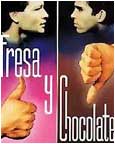
Fresa y chocolate

Sheet:
Film: Fresa y Chocolate
Year: 1994
Address: Tomas Gutierrez Alea, Juan Carlos Tabio
Country : Cuba, Spain and Mexico.
Writer: Senel Paz
Actors: Jorge Perugorria (Diego), Vladimir Cruz (David), Mirta Ibarra (Nancy), Francisco Gattorno (Miguel), Joel Angelino (Germar), Marilyn Solaya (Vivian), Andrés Cortura (Santeria priest ), Antonio Carm one (boyfriend).

Two humans seek their identity. David, a student of Social Sciences at the University of Havana and an artist Diego obsessed gay culture are. This encounter gives rise to a complex world interpersonal relationships in which there is endless friendship and passion, which leads to seriously jeopardize the freedom of both.

The film succeeds in showing what brings people over social convention. Shows life in Havana deep inside and repression suffered by a homosexual in a communist society, among other things.

Romina Suarez

This film has a initially quite dense with explicit sex scenes that complicates even the understanding of its development. However, later shown to have a very interesting plot. The political problem living there, affects the main characters (David and Diego).
The film takes place in Havana (Cuba), in 1993. The main character is a political science college student named David, and Diego, the other character, a revolutionary gay artist interested in cultural expression. When these characters are is where the story begins, while their personal relationships, mixing and confusing friendship with love, freedom and sex expression of love.
Noceda Luz Garay, Maria Martinez Carrasco, Aldana Sun Brisueña

Rabbits Cages U Lin To

Links: Linking Schools Project

Digital Journalism Workshop Report

Icarly Subliminal Messages

Municipal Sox: Digital Journalism

Buenos Aires, June 13, 2006

Del chat journalistic production

daily Young people enter the virtual world could it be school outside this knowledge built or booths cybers ?
Teachers from different areas gathered yesterday at the Normal School No. 1 in the City of Buenos Aires to consider ways and consumption. The purpose of these meetings is the Concurrent training but not only in content but in terms of practices that are far closer to students than teachers. "The wealth is in this peculiarity: that the teachers sharpen their skills as readers and enter that world as it is apparently still outside cyberspace," said one participant.
Meetings are monthly and are part of the project report (REd Porteña Telematics) under the Ministry of Education. In addition to this workshop on "Digital Journalism", this program offers various lines of work in relation to the implementation of Information Technology and Communication (ICT) City Public Schools. "We want teachers to appreciate and accept ICTs as facilitators of learning opportunities and link with teenagers, "contributed to this means a reference of the team.
The call had a good response, the first steps have been taken: a considerable number of teachers locals have accepted the challenge.